
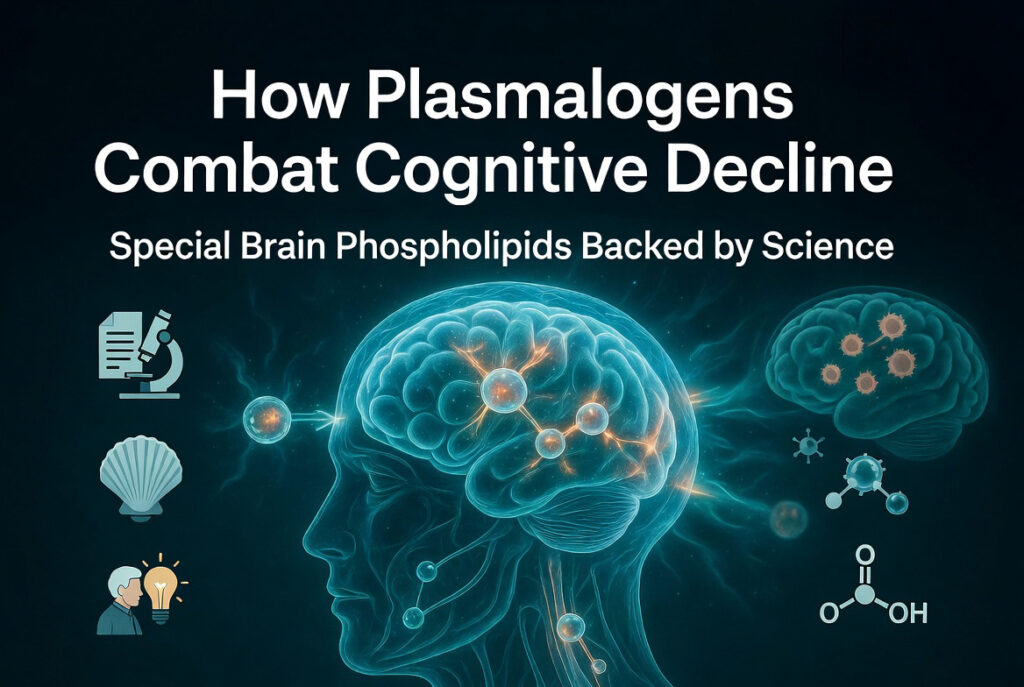
Plasmalogens are special phospholipids abundant in brain cell membranes (especially ethanolamine plasmalogens or PlsEtns). They support membrane fluidity, protect against oxidative stress, aid synaptic function, and may reduce inflammation. Levels drop significantly with age and in Alzheimer’s disease (AD).
Why They Matter for Brain Health
- Plasmalogens make up a huge portion of brain phospholipids (up to 80% in white matter).
- They act as antioxidants, stabilize membranes, support neurotransmitter release, and may inhibit amyloid processes.
- Deficiency links to cognitive deficits, synaptic loss, and neurodegeneration.
Key Evidence: Levels Plummet in AD
- Postmortem studies: Up to 70% reduction in brain plasmalogens in AD patients vs. controls. Correlates with disease severity.
Blood/serum: AD patients show 40-55% lower levels. Those with ≤75% of normal levels had faster cognitive decline over 12 months (ADAS-Cog scores).
Predictive: Low circulating plasmalogens predict higher AD risk, independent of amyloid/tau in some analyses.
Animal Studies: Supplementation Reverses Decline
- Aged mice given plasmalogens (2 months): Better spatial learning/memory (Morris water maze), increased neurogenesis, stronger synaptic connections, reduced neuroinflammation. Even glossier fur!
Other models: Reduced amyloid, protected neurons, improved cognition.
Human Clinical Trial Highlights
- 2017 RCT (Fujino et al., 328 patients with MCI/mild AD, 24 weeks, 1mg/day scallop-derived plasmalogens vs. placebo):
Improved memory (WMS-R) in mild AD, especially women and those <77 years.
- Stabilized blood plasmalogen levels (placebo group declined).
- Safe, no major side effects.
- Subgroup benefits clear in early stages; stronger effects in milder cases.
More recent work explores precursors and mood/sleep benefits too.
Mechanisms in Action
- Antioxidant protection in membranes.
- Support vesicle fusion for neurotransmission.
- Reduce inflammation and promote BDNF/neurogenesis.
- Potential early intervention target before advanced decline.
Food Sources & Practical Notes Rich in: Scallops, other seafood, some meats. Supplements (e.g., scallop-derived) used in trials at ~1mg/day.
Bottom Line: Declining plasmalogens appear as both a marker and potential driver of cognitive aging/AD. Early supplementation shows promise for preserving memory, especially in mild cases. More large trials needed, but the lipid science is compelling.
Consult your doctor before supplementing—especially if at risk. Brain health is multifactorial (exercise, sleep, diet all key).
What do you think—have you heard of plasmalogens? Share studies or experiences below! #BrainHealth #Alzheimers #Longevity #Plasmalogens
Sources: Peer-reviewed papers incl. Fujino 2017, Su 2019 review, Gu 2022 mouse study, etc.